

1. Requirements for vacuum SMT suction nozzle suction during placement
(1) No throwing (the throwing rate is within the allowable range);
(2) No slippage (insufficient vacuum suction will cause the position of the components to slip during the movement after the test);
(3) Non-stick materials (reliable separation of the components from the suction nozzle after they are placed in place).
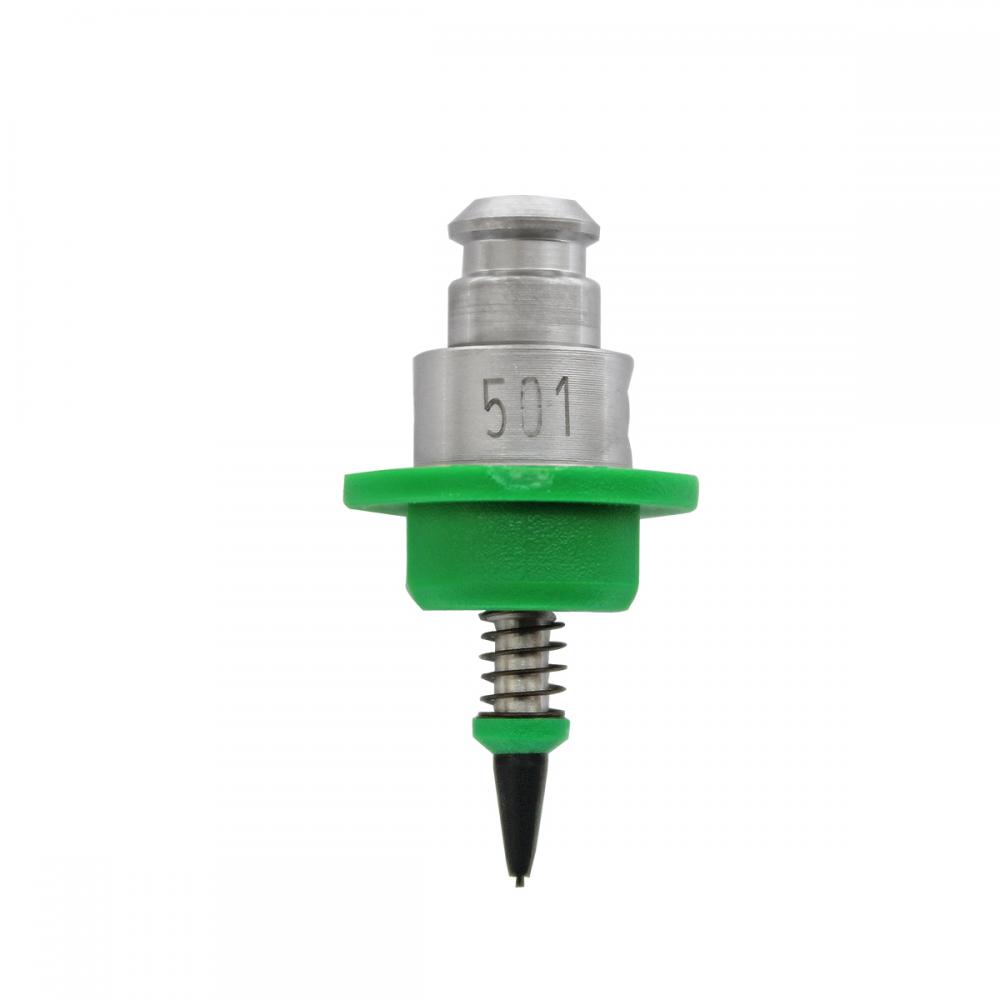
2. The basic principle of vacuum SMT nozzle suction
The principle of vacuum suction is to use the force formed by the difference between the vacuum system and the atmospheric pressure to grasp and move objects. This method of using pressure difference to fix or move objects has many applications in daily life, such as vacuum cleaners, vacuum adsorption hooks and Chinese medicine cupping, etc., and vacuum applications in industrial production are very extensive.
(1) Atmospheric pressure and atmospheric pressure
According to the principles of fluid mechanics, all objects in the earth`s atmosphere will be affected by air gravity. This force is the effect of atmospheric pressure, and the atmospheric pressure per unit area is the atmospheric pressure. The standard atmospheric pressure (1 atm) on the ground is approximately equal to the pressure (mmHg) produced by a 760 mm high mercury column. Different fields, different countries and regions use different pressure units. The commonly used pressure units in this technology are:
(2) Vacuum and vacuum degree
Generally speaking, vacuum refers to a state where the gas pressure is lower than atmospheric pressure, rather than a "vacuum" without air at all. In other words, the gas under vacuum is leaner than the gas under atmospheric pressure. A measure of the dilute degree of gas in a vacuum state, expressed as "vacuum degree". Traditionally, a high vacuum degree indicates that the gas pressure is much lower than atmospheric pressure; a low vacuum degree indicates that the gas pressure is less than atmospheric pressure.